

Spring in the Pacific Northwest is that in-between season. The rain hasn’t fully let up, but everyone is starting to think about summer—longer days, time outside, and enjoying your home again.
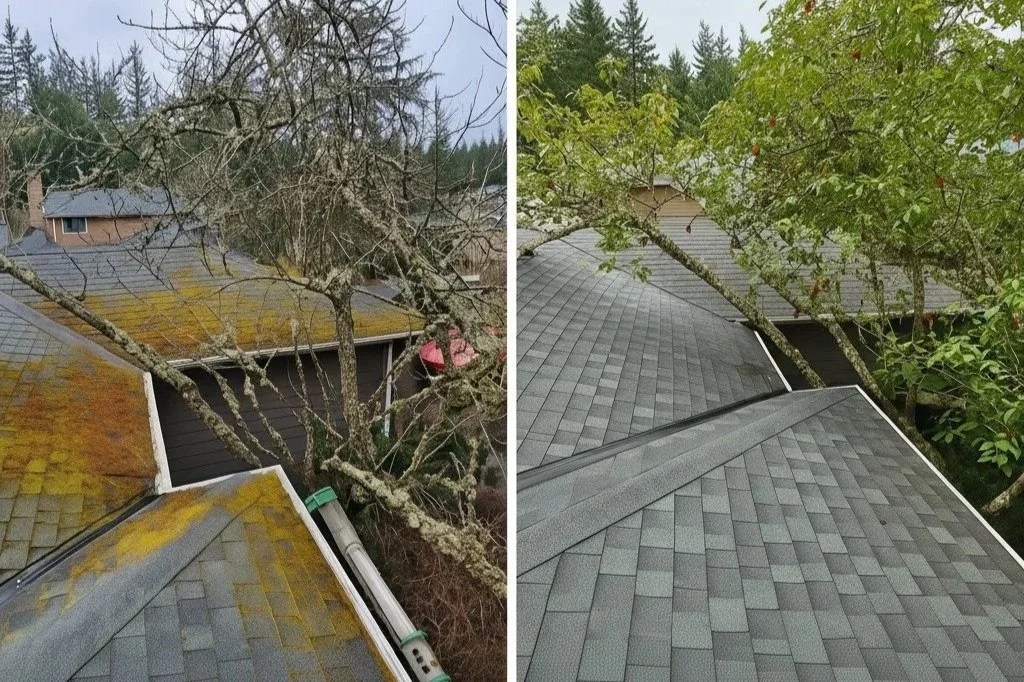
For a lot of homeowners, that also means looking up at the roof and realizing it’s covered in moss, debris, or staining from the winter.
So the question becomes: should you clean it yourself, or is it time to call a professional?
Let’s walk through it honestly.
1. The Biggest Factor: Safety
This is the one most people underestimate.
Roof cleaning isn’t just “a little dangerous”—it’s one of the more hazardous things a homeowner can attempt. Most people don’t have proper fall protection like ropes, harnesses, or anchors. Even ladder setup alone can be risky if it’s not done correctly.
And this isn’t hypothetical.
Every year, more than 500,000 people end up in the ER from ladder-related injuries, and over 300 die. Most of those aren’t contractors—they’re homeowners doing routine tasks like cleaning gutters or working on their roof.
Now add wet shingles, moss (which is extremely slippery), and steep pitches, and the risk goes up fast.
Simple rule:
If you feel even slightly unsure about being on your roof, that’s your answer. Don’t do it.
2. Height + Chemicals = A Bad Combo for DIY
Some homeowners think, “I won’t get on the roof—I’ll just spray it from the ground or a ladder.”
That’s where things get tricky.
Proper roof and siding cleaning involves chemicals that need to be handled carefully. At a professional level, this includes:
Controlled application
Proper dilution ratios
Personal protective equipment (respirators, gloves, eye protection)
Most homeowners aren’t thinking about chemical exposure when they start spraying.
Even siding cleaning can become risky once you’re dealing with:
Second-story height
Wind drift
Overspray onto skin or landscaping
3. Not All “DIY Methods” Actually Work
There’s a lot of bad advice floating around online.
We’ve heard everything from laundry detergent to household cleaners being recommended for roof moss. The reality is, most of these either:
Don’t work at all
Only provide temporary results
Or worse—damage your roof and surrounding areas
Cleaning a roof isn’t just about making it look better. It’s about using the right process to actually treat the moss and prevent it from coming back.
Using the wrong method can cost you more in the long run than just hiring it out.
4. The Pressure Washer Mistake
This one deserves its own section.
A lot of homeowners own a pressure washer, so it feels like the obvious tool for the job.
It’s not.
On an asphalt shingle roof, pressure washing can:
Strip away protective granules
Shorten the life of your roof significantly
Void manufacturer warranties almost immediately
It might look clean when you’re done—but you’ve likely done permanent damage.
5. Time: What’s Your Weekend Worth?
Even if you could do it safely and correctly, there’s still the time factor.
What takes a trained crew a few hours can take a homeowner an entire weekend—or longer.
Why?
You’re moving slower (understandably)
You don’t have the same equipment
You’re figuring it out as you go
And after all that time, there’s still a good chance the results won’t match a professional job.
So the real question becomes: is that the best use of your time?
6. How Often Should You Clean Your Roof?
In our area, this is what we typically recommend:
Blow off debris: 1–2 times per year
Full moss treatment: Every 1–2 years
Staying ahead of it is key. Once moss gets established, it spreads quickly and becomes much harder (and more expensive) to deal with.
So… When Should You DIY?
We’re not saying homeowners can’t do anything themselves.
If you’re working at ground level, on something simple, and you fully understand the risks—you may be able to handle small exterior cleaning tasks.
But when you add:
Height
Chemicals
Roof surfaces
Or uncertainty of any kind
That’s where DIY stops making sense.
Final Thought
Most homeowners don’t call a professional because they can’t do it themselves.
They call because they realize it’s not worth the risk, the time, or the potential cost of doing it wrong.
If you start the process and realize you’re in over your head, that’s normal.
Give us a call. We’re happy to step in and take it the rest of the way.
